
 Elitesofabric
Chair Upholstery Fabric
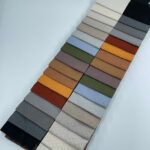
Chair upholstery fabric ranges from softly shaded velvet and tactile chenille to woven jacquard, dimensional grid textures and sleek faux-leather-effect finishes. These surfaces bring distinct color depth and hand to dining, accent and lounge chair seats and backs, with constructions suited to clean flat panels or smoothly wrapped curves.
Chair Upholstery Fabric
Chair Upholstery Fabric Surfaces Shape the Finished Seat
Product ListVelvet Brings Softness and Directional Depth
Velvet gives a chair a soft hand and a continuous field of color. Its pile reflects light differently as the viewing angle changes, so matte velvet reads as calm and softly shaded while a more lustrous pile creates stronger highlights. Cutting adjoining seat, back and side panels in the same nap direction keeps those shifts intentional rather than making one panel appear lighter than the next.
Chenille and Jacquard Add Woven Texture
Chenille yarn creates a rounded, tactile surface that can make a simple chair form feel fuller and more relaxed. Jacquard builds pattern into the woven structure instead of placing it only on the surface. On compact dining and accent chairs, a smaller repeat usually keeps the motif recognizable across narrow backs and seat panels; a large repeat needs more cloth for placement and matching. Long floats, pronounced loops and coarse texture also deserve attention on exposed edges where jewelry, fasteners or frequent movement can catch the surface.
Grid Velvet Creates Sculpted Light and Shadow
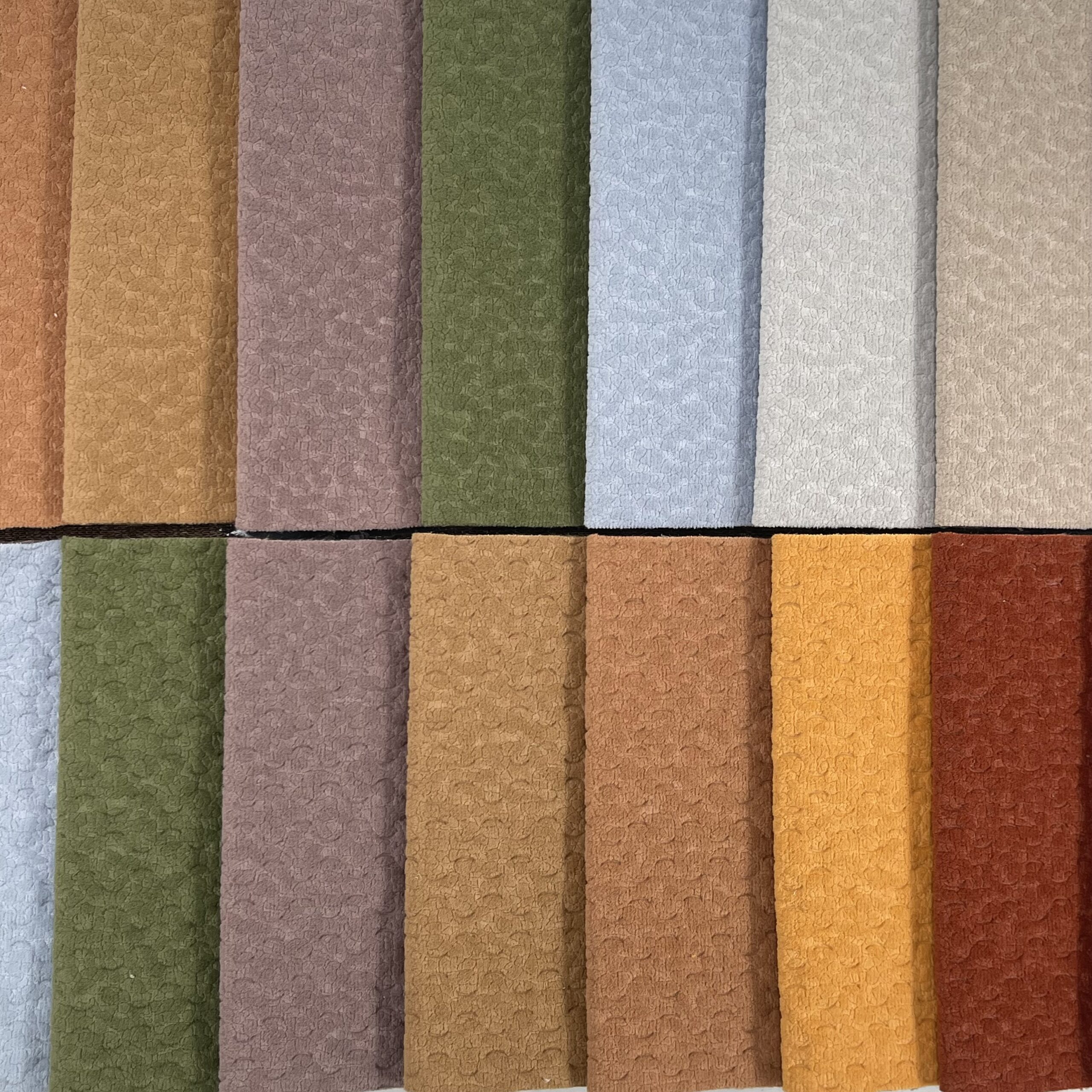
A raised grid gives a broad seat or upholstered back a dimensional surface even in one color. The relief catches light across the panel, making it especially effective on simple lounge-chair shells and accent chairs where texture supplies the decoration.
Faux-Leather-Effect Velvet Keeps a Sleek Textile Hand
A faux-leather-effect finish produces a flatter, more continuous face and a cleaner visual line while retaining a softer textile feel than a conventional coated surface. It suits contemporary dining and accent chairs with smooth wrapped panels, defined edges and minimal pattern interruption.
Construction and Pattern Direction Determine Upholstery Fit
Product ListA seat-only treatment refreshes the cushion while leaving a timber, cane or metal chair back visible. Stable jacquards, chenille and velvet can give this compact upholstered area a clear focal texture. Covering both the seat and back creates a more continuous, softer chair profile, with the fabric color and surface carrying across the whole silhouette.
Flat seats and simple back panels can accept firmer, stable constructions. Rounded backs, waterfall edges, deep contours and fully wrapped shells need enough conformability to lie smoothly under tension; excess stretch can let seams wander, while a fabric that is too rigid can pucker or build bulky folds at tight corners. Backing, thickness and edge behavior also affect how neatly piping and defined seams hold their shape.
Directional pile, stripes, grids and woven motifs should run consistently across visible panels. Aligning a pattern from seat to back creates a deliberate finish, though matching the repeat uses more cloth. A large representative sample and one trial-wrapped complex detail are usually enough to reveal color, scale, direction and seam behavior before production.
Use and Care Conditions Define Long-Term Chair Performance
Product ListDining-chair fabric benefits from a surface that releases everyday food and drink marks with gentle spot care. A flatter velvet, compact chenille or sleek finished surface leaves fewer deep recesses for crumbs and makes the seat easier to refresh without vigorous rubbing that can disturb the texture.
Frequently used chairs and hospitality seating place repeated pressure on the seat front, side seams and back-contact area. A compact construction with stable seams is a practical choice here; visible loops, long floats and very deep piles are better reserved for positions where snagging and crushing are less intense. Upholstery performance can then be confirmed against the intended traffic level with the relevant abrasion, pilling and seam data.
Velvet lounge and accent chairs develop characteristic shading as the pile is brushed or sat on. That movement is part of the material's visual depth, while a shorter, denser pile generally gives a neater look on frequently touched panels. For chairs beside large windows, color and finish should also be selected for sustained light exposure: pale shades show soil sooner, and rich dark colors need suitable lightfastness to retain their depth.
Chair Upholstery Fabric Options
Chair upholstery fabrics range from smooth velvet and woven chenille to jacquard textures, bonded constructions and coated-look finishes. Compare surface direction, pattern scale, backing, conformability and care needs against the chair shape and its expected use.
Ultrasonic Bonded Matte Velvet Upholstery Fabric
Dining chairs, accent chairs, upholstered backs and seating panels requiring a subdued velvet surface.
- Width / weightApprox. 145 cm (57.1 in) usable width; 300–450 g/m² (8.8–13.3 oz/yd²), subject to final color and bonding specification.
- MaterialPolyester matte velvet face with a bonded textile backing.
- Construction / handlingUltrasonic bonded construction; directional pile should be cut consistently.
- SampleColor cutting available; production sample recommended before bulk. Sample fee and freight are credited against a qualifying bulk order.
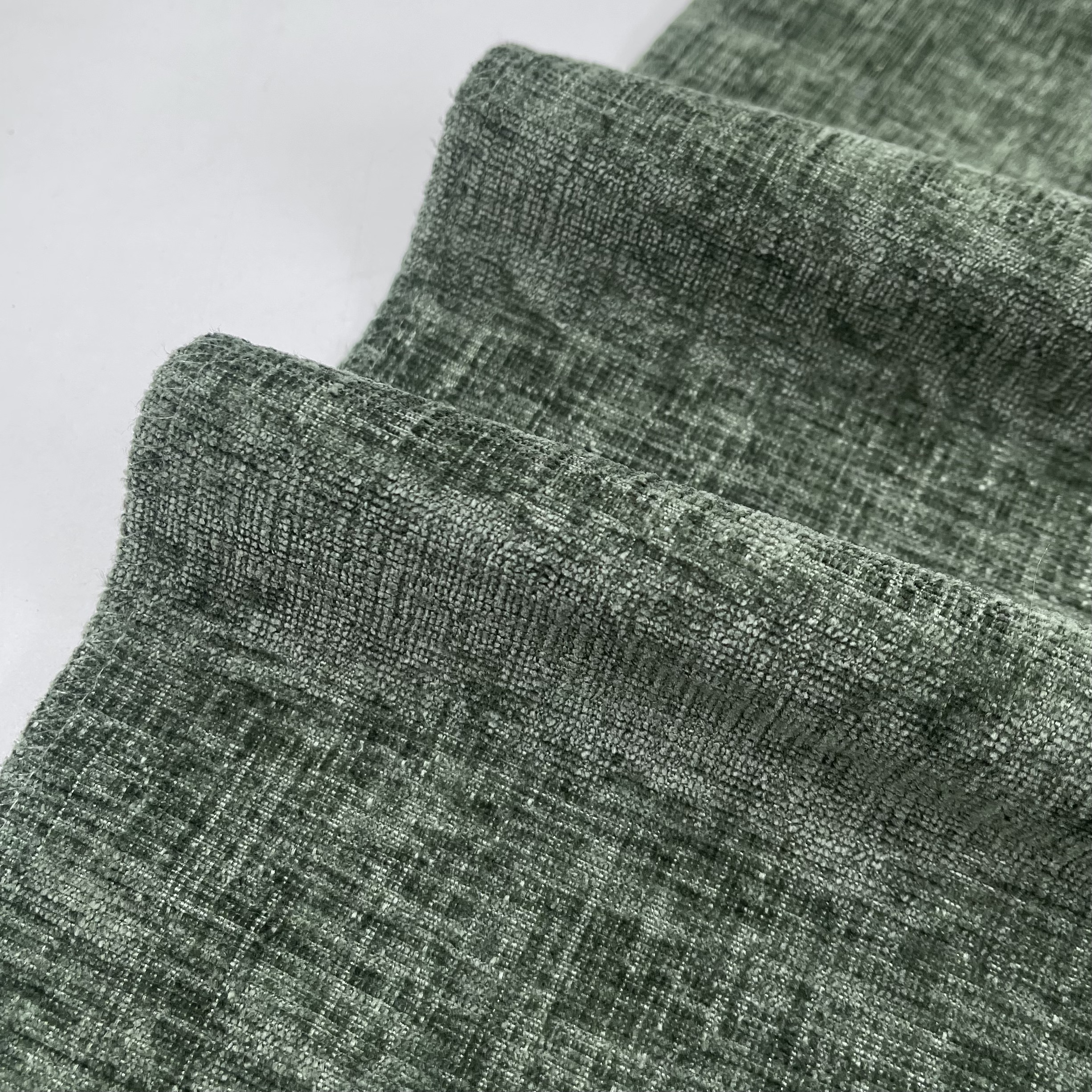
Flat Jacquard Chenille Upholstery Fabric
Dining, lounge and accent chairs where woven texture and an integrated pattern are preferred.
- Width / weightApprox. 140–145 cm (55.1–57.1 in) usable width; 350–450 g/m² (10.3–13.3 oz/yd²), subject to final construction.
- MaterialPolyester chenille and filament yarns in a woven jacquard construction.
- Construction / handlingFlat jacquard weave; confirm repeat, motif direction and seam alignment on the approved sample.
- SampleColor cutting or hanger sample available; approve the full repeat before bulk production. Sample fee and freight may apply.
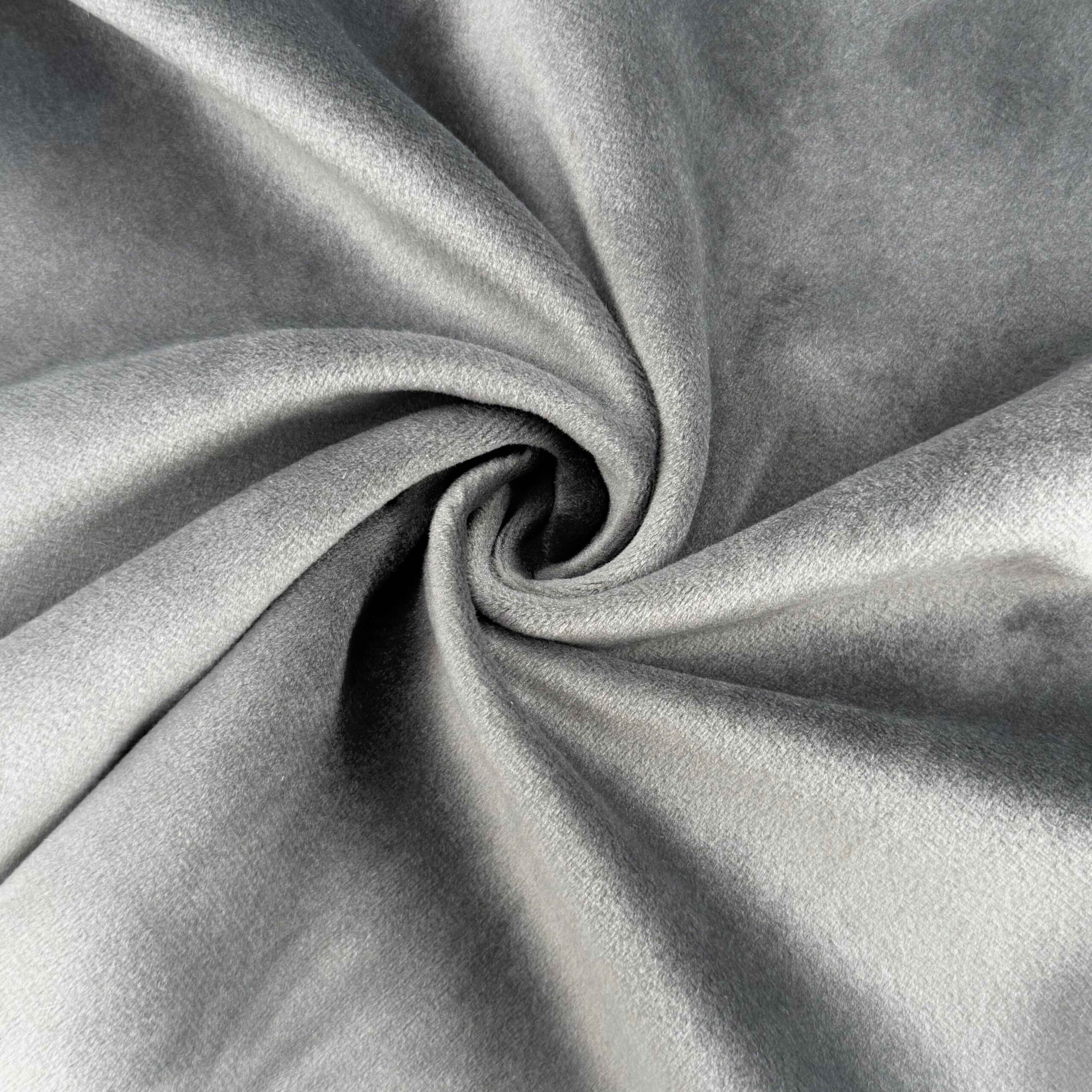
Plain Holland Velvet Upholstery Fabric
Dining chairs, vanity chairs, upholstered head chairs and accent seating requiring a plain velvet face.
- Width / weightApprox. 145–150 cm (57.1–59.1 in) usable width; 240–320 g/m² (7.1–9.4 oz/yd²), subject to color and finish.
- MaterialPolyester Holland-style velvet.
- Construction / handlingPlain directional pile; keep nap orientation consistent across visible panels.
- SampleStock-color cutting available where offered; custom color sample produced before bulk. Freight and custom color fees quoted separately.
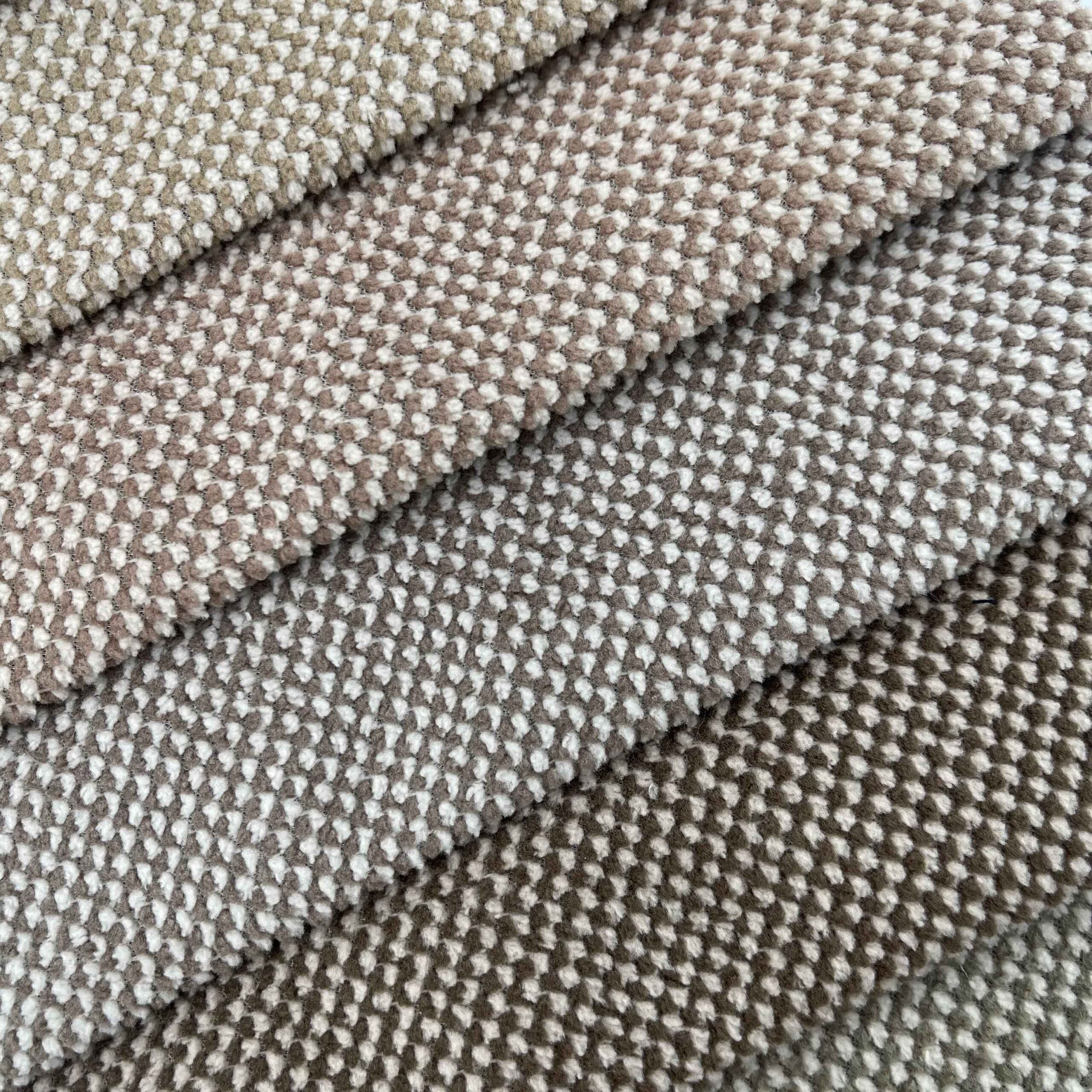
Cationic Dyed Pineapple Grid Velvet Sofa Fabric
Accent chairs, lounge chairs and upholstered panels where a geometric textured surface is part of the design.
- Width / weightApprox. 145 cm (57.1 in) usable width; 280–380 g/m² (8.3–11.2 oz/yd²), subject to the selected grid and backing.
- MaterialCationic-dyed polyester velvet with a pineapple-grid surface.
- Construction / handlingDirectional textured grid; confirm grid scale, cutting orientation and alignment before production.
- SampleTexture and color cutting available; a larger sample is recommended for grid scale and panel layout. Sample and freight charges quoted by destination.
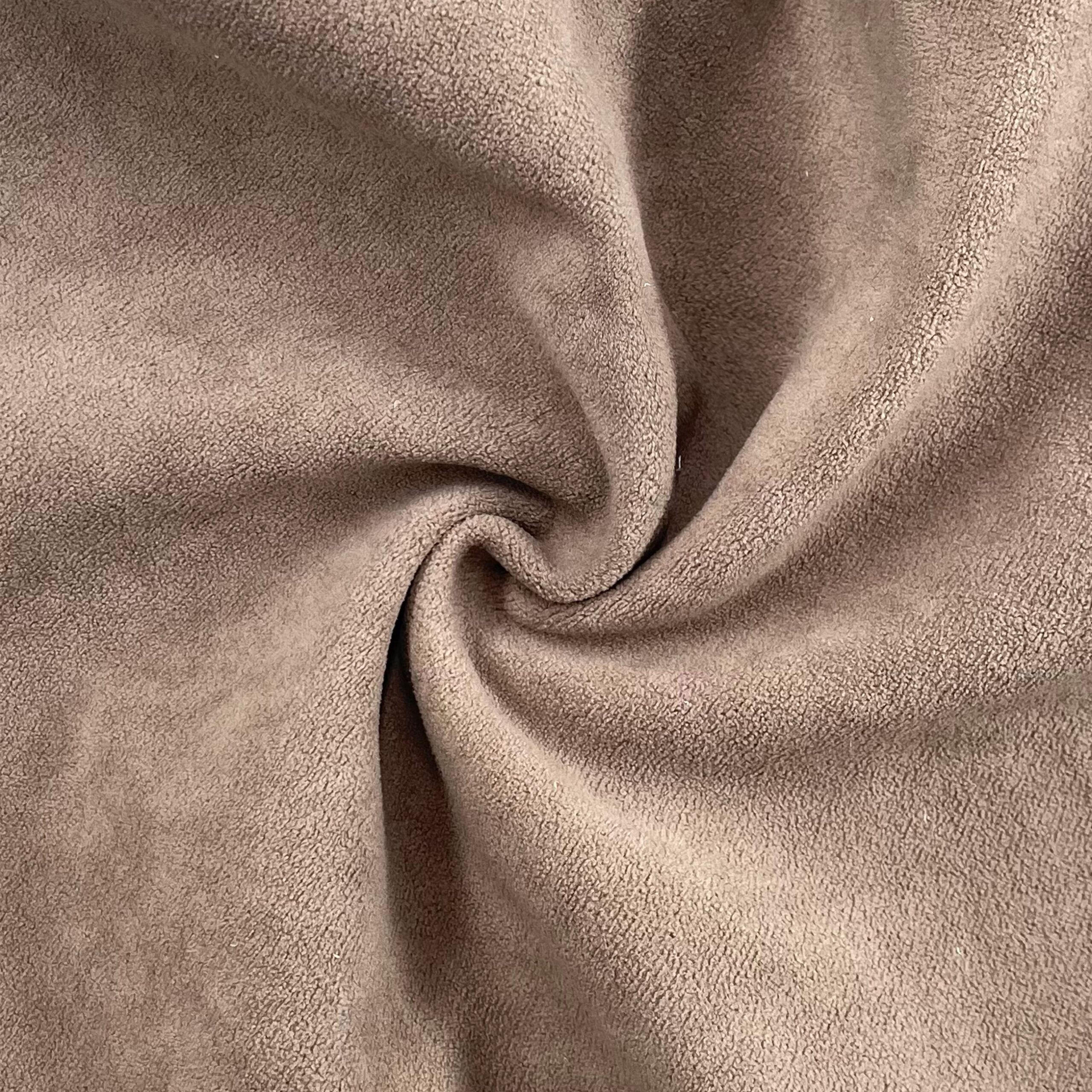
Ice Cool Faux Leather Velvet Upholstery Fabric
Contemporary dining and accent chairs with smooth wrapped panels and a refined coated-look appearance.
- Width / weightApprox. 140–145 cm (55.1–57.1 in) usable width; 300–420 g/m² (8.8–12.4 oz/yd²), subject to finish and backing.
- MaterialPolyester velvet with a faux-leather-effect surface finish.
- Construction / handlingFinished textile surface; approve flexing, layer adhesion and cleaner compatibility for the chair design.
- SampleFinish and color sample available; trial upholstery is recommended for tight curves. Sample fee and freight quoted with the request.
Samples, Production and Export Delivery
Sampling, trial quantities and bulk supply follow separate timelines so fabric appearance and construction can be confirmed before repeat production.
Color cuttings are available for initial hand and color review; standard samples dispatch in about 3–5 business days, while custom color or finish samples require about 7–10 business days after sample-fee confirmation.
300 m (328 yd) per color for standard constructions; custom colors, prints, backing or finishes normally begin at 500 m (547 yd) per color. Trial pricing reflects sample setup and short-run handling.
1,000 m (1,094 yd) per color is the standard production MOQ, with lower unit pricing available at 3,000 m (3,281 yd) and 5,000 m (5,468 yd) tiers.
Standard-color bulk production is approximately 20–25 days; custom colors or finishes are approximately 25–35 days after deposit and approved sample. Transit time is separate.
Fabric is supplied in labeled rolls with protected outer wrapping. Continuous length, roll length, shade-lot allocation and allowable short lengths are confirmed on the order.
Shipments can support the Americas, Europe, the Middle East and Africa by courier for samples, air freight for urgent small lots, and sea freight for bulk rolls. EXW, FOB named China port, CIF named destination port and DAP named destination are available under Incoterms 2020; import clearance, duties and local access limits follow the selected term.
Custom Color, Finish and Chair Panel Development
Send the chair drawing, upholstery panel layout or reference image with the required color, quantity and destination. PDF, DWG, DXF, STEP, STP, JPG, JPEG and PNG files are accepted up to 10 MB; the request can cover custom color, pattern scale, backing, finish, usable width and sample requirements.
Chair Upholstery Fabric Questions
These answers cover material choice, samples, customization and supply planning.
What makes a fabric suitable for upholstering chairs?
A chair upholstery fabric needs a surface and construction that suit the chair shape, plus adequate abrasion, pilling, seam, colorfastness and cleaning performance for its use. Flat seats can accept firmer fabrics, while curved backs, tight corners and piping require suitable conformability and stable seams.
Which fabric surface works best for dining or accent chairs?
Smooth velvet gives soft directional depth, chenille adds rounded woven texture, jacquard builds pattern into the cloth, and coated-look finishes create a cleaner continuous face. The best choice depends on the chair form, traffic, spill exposure, desired hand and maintenance routine.
How should I evaluate a chair upholstery fabric sample?
Use a sample large enough to show the complete pattern repeat, pile direction, face and back, edge behavior and color under the room's actual lighting. For curves, deep buttons, piping or tight corners, trial-wrap or sew the material on a comparable detail before approving production.
Can chair upholstery fabric be customized?
Yes. Custom options can include color, pattern scale, surface finish, backing, usable width and selected performance targets. Send the chair drawing or panel layout, quantity, destination and reference image so the sample and production specification can be prepared around the application.
What are the sample, MOQ and lead-time options?
Standard color cuttings typically dispatch in 3–5 business days, and custom samples take about 7–10 business days. A typical trial MOQ is 300 m (328 yd) per color for standard constructions, while custom work generally starts at 500 m (547 yd); standard bulk production is approximately 20–25 days after deposit and sample approval.
Discuss Your Chair Upholstery Fabric
Share the chair type, fabric surface, color, quantity and destination. Add a drawing or reference image when pattern placement, curved panels or custom finishing matters.
- Phone: 13706595350
- Email: [email protected]
- WhatsApp: 13706595350
- NO.28 Road 8th Jingbian, Haining Warp Knitting Industry Zone, Haining City, Zhejiang Province