
 Elitesofabric
settee fabric material
Polyester Upholstery Fabrics for Settees
Choose a settee cover fabric by surface, construction, weight, backing, finish, and project requirements. Elitesofabric offers loop-yarn chenille, printed and embossed Holland velvet, foil-stamped velvet, waterproof-finished chenille, and textured jacquard velvet for sofas, settees, accent chairs, and cushions.

settee upholstery fabric
What “Settee Fabric Material” Actually Describes
A settee fabric specification has several layers. The fiber content identifies what the textile is made from; the yarn and surface describe effects such as chenille loops or velvet pile; the fabric construction identifies how the textile is formed; a backing can add structure; and a finish can change water behavior, appearance, or handling.
The products on this page list polyester as their fiber content. Polyester can support quick drying, dimensional stability, and many visual effects, but the fiber name alone does not establish abrasion resistance, pilling, snagging, colorfastness, cleanability, or service life. Those results depend on the complete construction and the test evidence for the exact product.
| Term | What it tells you | What still needs confirmation |
|---|---|---|
| Polyester | Fiber content | Construction, weight, finish, test results, and care |
| Chenille | A yarn or surface with a soft, textured character | Loop exposure, snagging, pilling, density, and cleaning behavior |
| Velvet | A pile surface with directional light and touch | Knit or woven construction, pile direction, crushing, and colorfastness |
| Jacquard | A pattern or texture formed through fabric construction | Fiber content, float length, snagging, repeat, and performance |
| Nonwoven backing | An added layer bonded to the face fabric | Bond durability, seam behavior, flexibility, and cleaning compatibility |
| Waterproof finish | A treatment intended to resist liquid penetration | Test method, pressure or exposure conditions, seams, and finish durability |
Choose the Surface for the Way the Settee Will Be Used
Start with the furniture location and the surface experience you want. Then screen the candidates for the stresses the settee will receive, the cleaning process available, the visual scale of the room, and the evidence required for the destination market.
| Project priority | Useful starting point | Confirm on the actual sample and specification |
|---|---|---|
| Deep texture and a soft, casual appearance | Loop-yarn chenille | Snagging, pilling, seam behavior, vacuum-tool compatibility, and loop recovery |
| Smooth pile with printed or embossed depth | Holland velvet | Pile direction, pressure marks, dry and wet crocking, lightfastness, and cleaning code |
| Decorative metallic effect | Foil-stamped velvet | Foil adhesion after flexing, abrasion, cleaning, and exposure to light and heat |
| Spill management for a busy seating area | Waterproof-finished chenille | The exact water test, finish durability after cleaning, backing behavior, and seam performance |
| Geometric texture and two-tone color depth | Cationic jacquard velvet | Pattern repeat, direction, snagging, batch color, and alignment at seams |
Use four decisions to narrow the order:
- Define the end use: fixed upholstery, removable cushion cover, accent chair, or decorative cushion.
- Rank the project priorities: hand feel, texture, abrasion, pilling, snagging, stain handling, colorfastness, light exposure, and maintenance time.
- Inspect a sufficiently large sample on horizontal, vertical, and curved surfaces under the project lighting.
- Approve construction, color, finish, care, test reports, cutting direction, and batch requirements before bulk production.
Explore Settee Upholstery Fabrics

Loop Yarn Chenille Sofa Fabric
This polyester upholstery fabric combines a loop-yarn, bouclé-like texture with a full chenille hand. Its 550 GSM weight and woven construction make it a substantial visual option for settees, sofas, armchairs, and cushions where pronounced texture is part of the design.
- Fiber contentPolyester
- ConstructionWoven
- Width142 cm / approximately 55.9 in
- Weight550 GSM / approximately 16.2 oz/yd²
- Listed processDyeing; OEM
- MOQ1,000 m per color

Printed Embossed Holland Velvet Composite Nonwoven Upholstery Fabric
This layered polyester upholstery material pairs a soft printed and embossed Holland velvet face with a nonwoven backing. The surface provides pattern and relief, while the backing adds a separate structural layer that should be evaluated with the face fabric during sewing, flexing, and cleaning trials.
- Fiber contentPolyester
- ConstructionWarp-knit face with nonwoven backing
- Width142 cm / approximately 55.9 in
- Listed weight200 + 100 GSM
- Listed processDyeing; OEM
- MOQ1,000 m per color
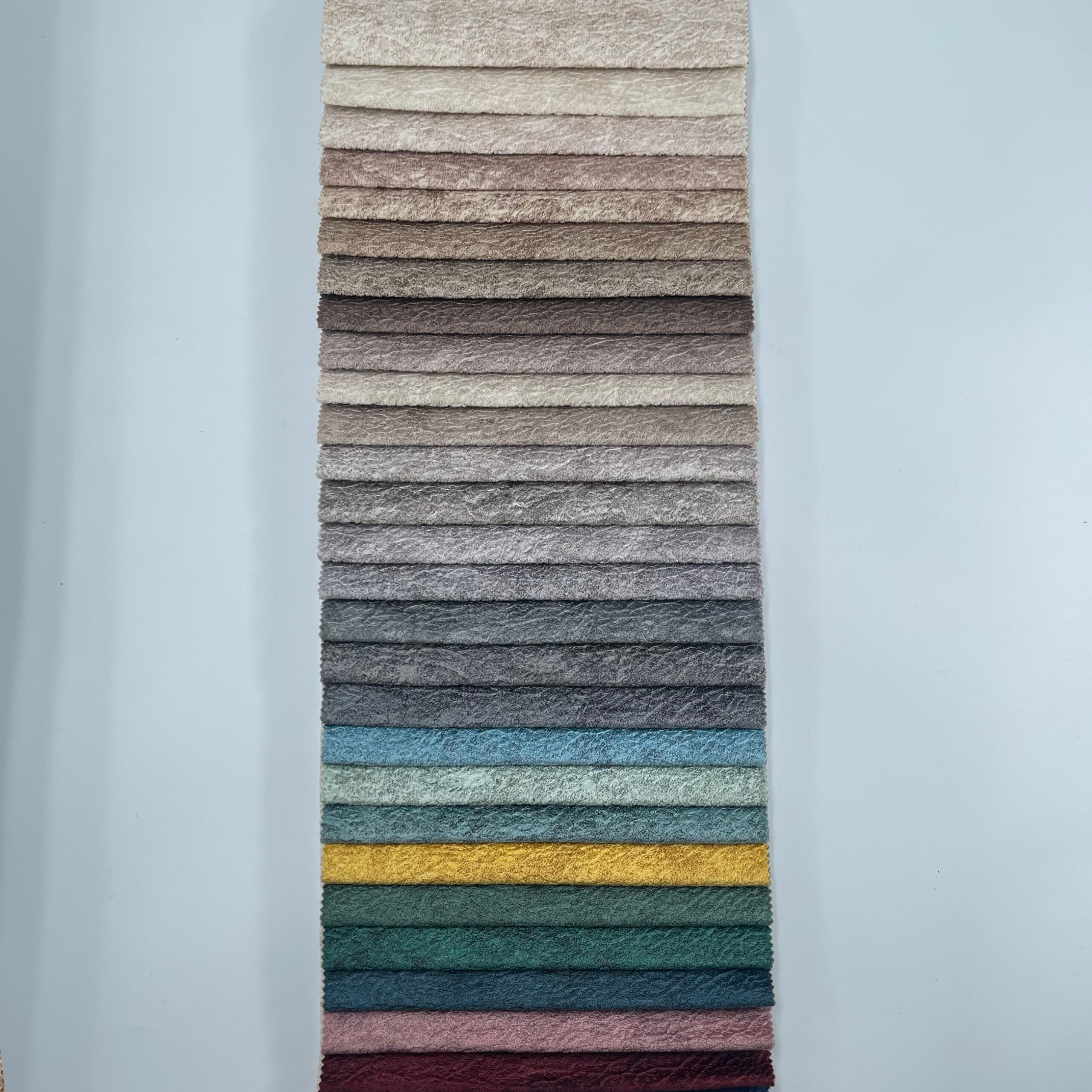
Printed Embossed Holland Velvet Upholstery Fabric
This polyester Holland velvet uses printing and embossing to create color, pattern, and raised visual depth. It is intended for decorative furniture surfaces such as settees, sofas, armchairs, and cushions.
- Fiber contentPolyester
- Width142 cm / approximately 55.9 in
- Listed weight200 + 120 GSM
- ConstructionConfirm before ordering; the product page contains both “Warp Knitting” and “Woven” entries
- Listed processDyeing; OEM
- MOQ1,000 m per color
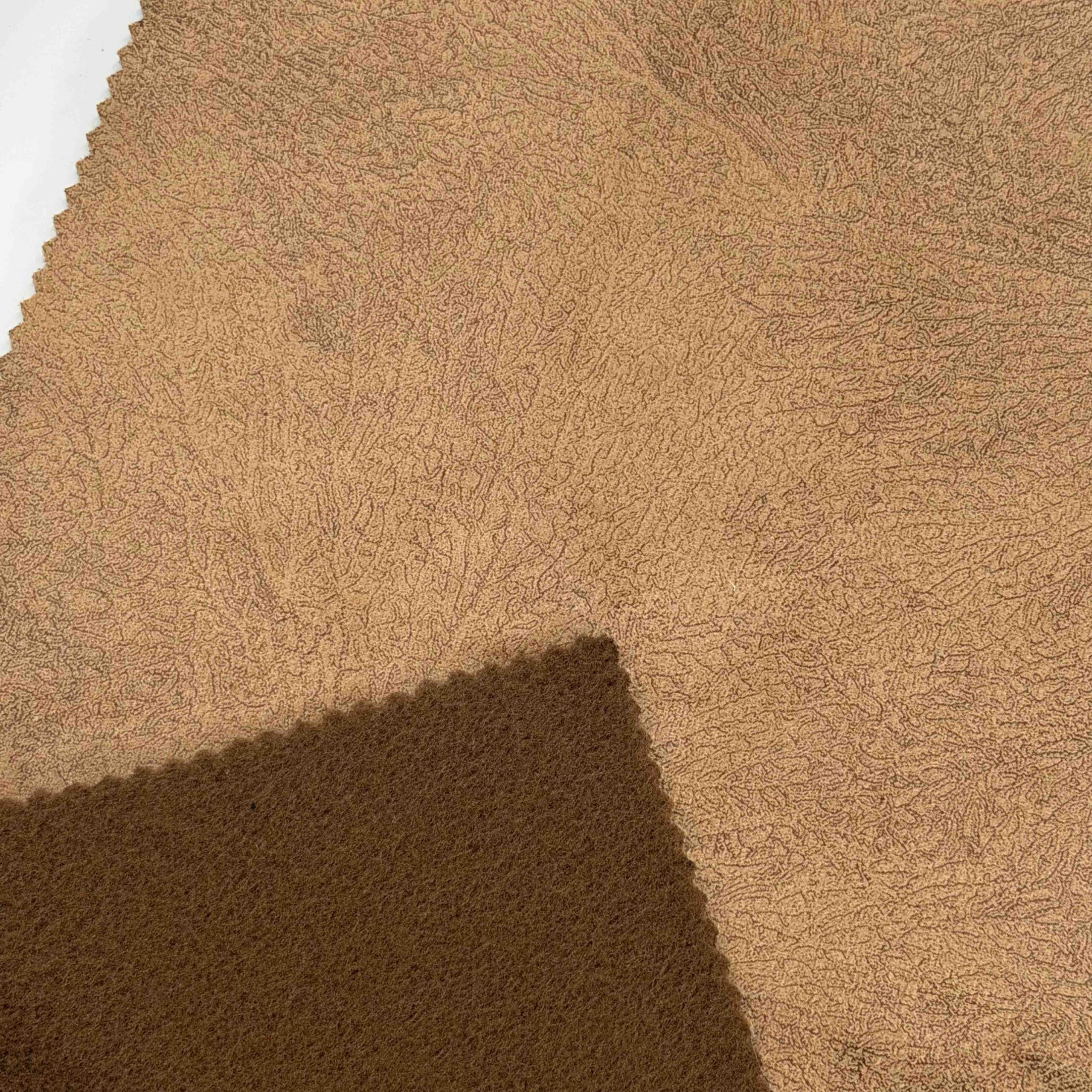
HANZO Foil Stamped Velvet Upholstery Fabric
This polyester velvet combines a soft pile surface with a metallic foil-stamped pattern. It suits settees, accent chairs, cushions, and other upholstered pieces that use sheen and directional reflection as part of the design.
- Fiber contentPolyester
- Width142 cm / approximately 55.9 in
- Listed weight220 + 160 GSM
- ConstructionConfirm before ordering; the product page contains both “Warp Knitting” and “Woven” entries
- Listed processDyeing; OEM
- MOQ1,000 m per color

Waterproof Chenille Fabric Style 5247
Style 5247 is a woven polyester chenille with a dense grain, a full hand, and a waterproof finish. It is designed for upholstered furniture projects that want solid-color texture together with controlled liquid resistance.
- Fiber contentPolyester
- ConstructionWoven chenille
- Width142 cm / approximately 55.9 in
- Weight380 GSM / approximately 11.2 oz/yd²
- FinishListed as waterproof; request the test method and result for the intended use
- Listed processDyeing; OEM
- MOQ1,000 m per color
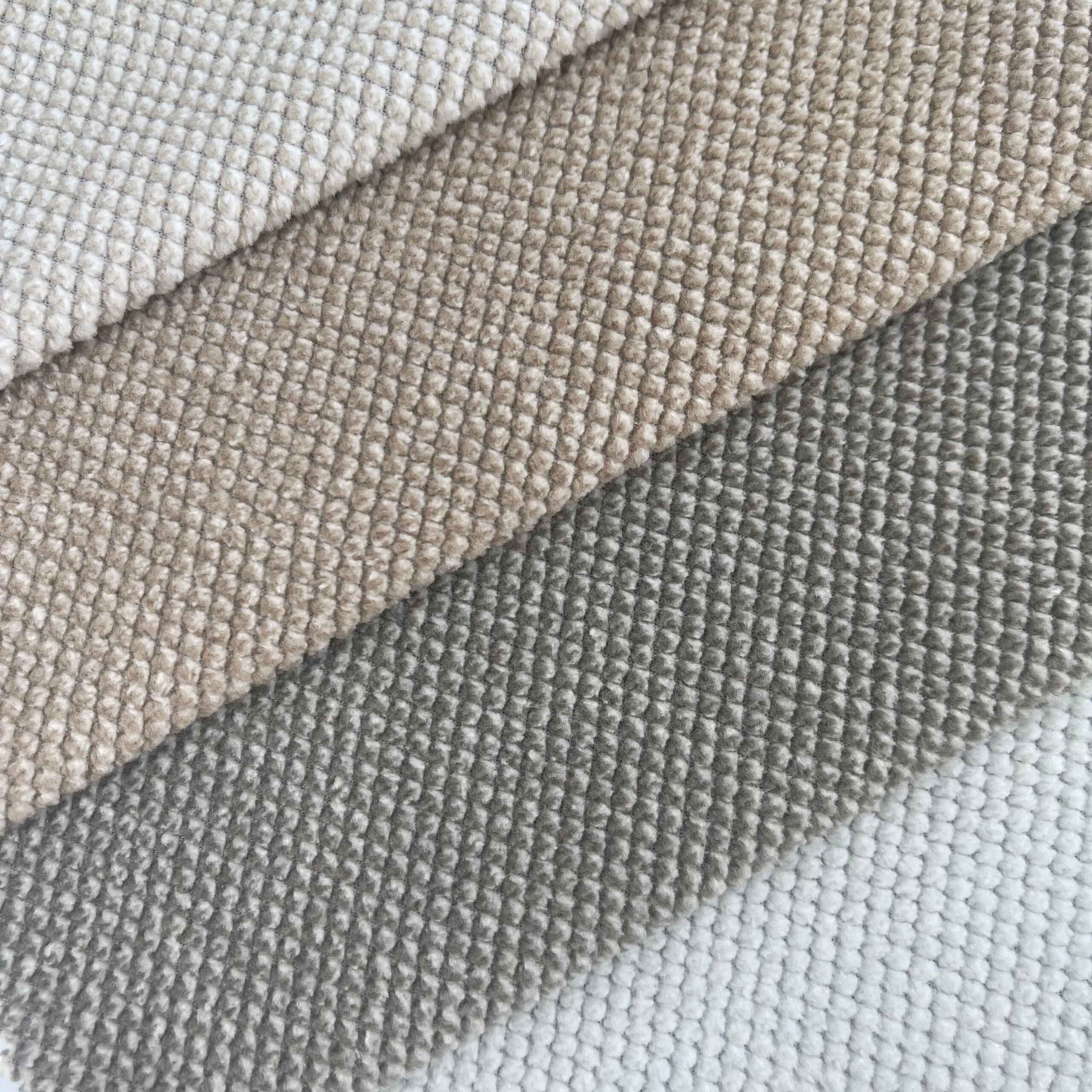
Cationic Dyed Pineapple Grid Velvet Sofa Fabric 260403
Style 260403 uses cationic-dyed polyester yarns to create two-tone color depth and a raised pineapple-grid texture. The structured pattern gives settees, sofas, armchairs, and cushions a geometric surface with visible dimension.
- Fiber contentPolyester
- Listed widthConfirm before ordering; the product page contains both 140 cm (approximately 55.1 in) and 142 cm (approximately 55.9 in) entries
- Listed weight240 + 140 GSM
- ConstructionConfirm before ordering; the product page contains both “Warp Knitting” and “Woven” entries
- Listed processDyeing; OEM
- MOQ1,000 m per color
Write a Purchase Specification That Can Be Tested
A useful upholstery specification identifies the exact product and the conditions under which it will be accepted. Record the supplier style, fiber content, construction, usable width, weight, face and back, color standard, dye lot, pile or pattern direction, repeat, backing, finish, end use, care method, quantity, packaging, destination, and required delivery window.
Performance requirements need a method, conditions, units, and an acceptance result. Common indoor upholstery checks include dry and wet crocking, lightfastness, pilling, abrasion, breaking strength, seam slippage, snagging, dimensional stability, finish durability, and cleaning compatibility. Martindale cycles and Wyzenbeek double rubs use different test systems and should remain in their original methods rather than being converted into one another.
For an indoor woven project that uses ACT voluntary guidelines as its benchmark, the buyer may specify the relevant ACT references for colorfastness, pilling, strength, seam slippage, and abrasion. The project team should confirm that the guideline applies to the construction and end use. Warp-knit, backed, coated, outdoor, or market-regulated applications may require a different test plan.
The six products above publish material, width, weight, process, use, and MOQ information. Request the current product specification, care instruction, color standard, test reports, and batch approval details needed by your project before placing a bulk order.
Build My RFQMove from Sample to Bulk With Clear Approval Points
Define the request
State the furniture type, fixed or removable application, target market, quantity, color or pattern, desired hand, required finish, performance criteria, care method, packaging, destination, and schedule. Include the actual settee dimensions or a cutting plan when the inquiry concerns yardage.
Approve the right sample
Use a swatch to review the initial color and hand, then request a sample large enough to show pile direction, surface scale, pattern repeat, backing, and behavior on curves and seams. A lab dip mainly approves color development; a strike-off mainly approves print color, scale, and process. Record exactly which attributes each sample approves.
Test and upholster before scaling
Match test methods to the use case, and trial the fabric with the intended seam, thread, foam, backing, fastening method, and furniture geometry. A flat swatch cannot show every effect of tension, curved wrapping, directional pile, pattern alignment, or repeated cleaning.
Lock the production reference
Link the approved sample to the style, color, construction, finish version, date, and order. For bulk receiving, check roll labels, lot numbers, usable width, color against the approved standard, direction, pattern alignment, visible defects, packaging, and the required documents.
Discuss Sampling and OEM RequirementsPlan Yardage, Direction, and Cutting Before Ordering
Calculate settee fabric from the actual cutting pieces rather than the seat count alone. Arm width, back height, cushion count, skirts, deep buttoning, piping, curved sections, and seam locations can change material use even when two settees have the same number of seats.
Create the layout after confirming the usable width. A listed width of 142 cm is approximately 55.9 inches, while 140 cm is approximately 55.1 inches. Use the net cutting width from the production roll, since selvages and width variation can reduce the area available for parts.
Pile, loop direction, stripes, checks, embossed motifs, and printed repeats restrict how pieces can rotate. Plan one consistent direction across visible parts, center important motifs, align seams where required, and add allowances for pattern matching, defects, cutting, and future repair material. When the furniture needs more than one roll, define how lots and roll numbers will be allocated to visible pieces.
Request Width and Repeat DetailsCare for Texture, Pile, Print, and Backing
Follow the care instructions for the exact fabric and finished furniture. A polyester label does not establish whether water-based cleaner, solvent cleaner, removable-cover washing, or machine washing is permitted.
Vacuum loose particles with an attachment that does not catch loops or pull raised yarns. On chenille and other dimensional surfaces, test brushes and hair-removal tools on a spare sample before using them across the settee. On velvet, work in the approved pile direction and restore the surface only as the care instructions allow.
Blot spills promptly instead of rubbing them across a larger area. Identify the soil and pretest the permitted cleaner on an inconspicuous sample. Avoid saturating the face, backing, seams, foam, or adhesive layers; excessive liquid can create rings, slow drying, color movement, stiffness, or layer separation.
Printed, embossed, foil-stamped, waterproof-finished, and composite fabrics need care trials that check the surface and the full construction after cleaning. Let the fabric, backing, and filling dry fully before judging color, pile, odor, or texture.
Ask for Product-Specific Care InformationFrequently Asked Questions
Which settee fabric material is best for daily use?
The best choice depends on the seat load, snagging exposure, likely spills, light, cleaning method, desired texture, and required test evidence. Compare the complete fabric and its reports; fiber content or weight alone does not establish daily-use performance.
Are all six featured fabrics polyester?
Yes. Each linked product page lists polyester as the fiber content. Their surfaces, constructions, weights, backing, finishes, and appearance differ.
What is the minimum order quantity?
Each featured product page lists an MOQ of 1,000 meters per color. Confirm the current MOQ, sample terms, color development quantity, and order tolerances in the written quotation.
Can I approve a color from the website image?
Use online images to create a shortlist, then approve a physical sample under the project lighting. Record the style, color reference, lot or approval sample, pile direction, and allowed color tolerance for production.
Does “waterproof” mean the finished settee cannot absorb a spill?
The Style 5247 page lists a waterproof finish. Ask for the applicable test method, result, treatment durability, backing condition, and cleaning limits. Seams, needle holes, cushions, and other furniture components also affect how the finished settee handles liquid.
What should I send with a quote request?
Send the selected product or desired surface, end use, settee dimensions or cutting plan, quantity, color or pattern, target width and weight, required tests or market requirements, backing or finish needs, packaging, destination, and required timing.
Get a Settee Fabric QuoteRequest a Settee Fabric Quote
Tell us which fabric you are considering and how the settee will be used. Haining Tuoda New Material Co., Ltd. can then discuss the relevant sample, color, construction, finish, quantity, testing, and order details with you.
- Phone: 13706595350
- Email: [email protected]
- WhatsApp: 13706595350
- Address: NO.28 Road 8th Jingbian, Haining Warp Knitting Industry Zone, Haining City, Zhejiang Province