 Elitesofabric
How To Clean Upholstery Fabric: 5 Easy Cleaning Methods
0Learn How To Clean Sofa Fabric In 10 Minutes. Master 5 Easy Methods To Remove Daily Stains And Protect Your Couch.
View details
Search the whole station
The sofa at home often has to go through many “tests”, and rarely only 1 a single stain. Biscuit residue may fall into the gap, drinks may be spilled on the seat, and cat and dog hair is always stuck on the armrest. Even oil stains left over from Xiong Haizi’s food or scribbled colored pen marks may appear on the sofa at any time. In fact, it is impossible to judge whether a piece of fabric can withstand the ordeal by relying solely on the 3 words “easy to clean” promoted by the merchants.
Therefore, when choosing sofa fabrics for home care, it is more practical to list the most common conditions in the home first, and then check the surface structure of the fabrics, nursing restrictions and whether they will change after washing. Only in this way can the selected fabric really stand the test of daily life, instead of just buying a good-looking label on the detailed page.
 The Key To Keeping Your Living Room Sofa Easy To Clean: First, Prioritize The Risks In Your Home.
If there are children in the house, the drinks, oil and paint are definitely much more troublesome than ordinary dust. If you have a pet, you have to take into account all the factors such as hair loss, scratching, urine stains, vomit and peculiar smell. As for the high-frequency areas that sit every day, they not only have to bear the weight and friction of people, but also undergo repeated cleaning.
I suggest everyone write these specific scenarios into a comparison table. The core conditions that must be met may include: what cleaning agents are allowed, how to deal with common stains, the conditions for drying, and whether there will be color difference, hardness or water stains easily after washing. As for color and feel, these are personal preferences, but don’t let them overpower the practicality indicators just mentioned.
Generally speaking, a smooth, tightly woven surface that doesn’t shed is much easier to clean up crumbs and hair. On the contrary, those fabrics with obvious coils, long fluff, deep texture, or quilting and embroidery processes are not only easy to hide dirt, but also inconvenient to take care of with a suction head or brush. This is not to say which is absolutely good or bad, the key depends on what is the main cleaning burden in your home.
Don’t 1 see “polyester”, “microfiber” or “technology cloth” this word, blindly think it must be easy to wash. You know, even if the same fiber, using different textile structures, dyes, coatings, base fabrics and finishing processes, the cleaning methods it allows may be very different. You can use “compact surface” as the threshold for the first 1 of preliminary screening, but then you have to take a closer look at whether it will pilling, hook silk, have a firm seam, and whether its appearance will get worse after repeated rubbing.
The common cleaning codes such as W, S, WS and X in the industry just tell you what kind of cleaning medium this fabric is allowed to use. It does not guarantee that you will be able to completely remove the stain, nor does it mean that the sofa cover can be thrown directly into the machine wash. Similarly, don’t see a zipper on the sofa, just take it for granted that it can be removed. Whether it can be disassembled and washed, how much water it needs to be washed, and how to dry it, all have to be honestly confirmed on the nursing instructions on the finished product.
If it is the kind of fixed non-removable soft sofa, but also to consider the inside of the cloth, glue layer, sponge, stitching and even wood frame. Just because the surface fabric can withstand a few drops of water doesn’t mean the entire piece of furniture can be submerged in water. it is better to ask 1 mouth at the same time when buying: how to get local dirty? what kind of cleaning agent can be used? do you need to find a special cleaning team? how to ventilate and dry after washing?
Businessmen often say that “anti-pollution” may mean that the liquid is not easy to seep into, or it may mean that it is easier to wash off after getting dirty. In fact, the two are completely different things. When looking at the test report, we should pay attention to what kind of stain they are testing, how long they stay, how they are cleaned, how many times they are recycled, and what is the final qualified standard.
If it is only an understatement of the sentence “passed the coffee antifouling test” or “easy to handle”, the amount of information it provides is actually far from enough.
Before finalizing your order, it’s best to ask the retailer for a few sample swatches of the fabrics you’re considering. Simulate the real soiling scene at home, and try drinks, oil stains or other stains that are most likely to be stained according to your usual cleaning habits. You can first do a test in the inconspicuous corner of the fabric to see if the color will fade after cleaning, if 1 circles of water stains will be left, or if the fabric will harden and pilling. Once you’ve confirmed that everything is in order, then decide whether to proceed with a large-scale cleanup. Also, please be extremely careful: don’t mix different cleaning agents, and never scrub too hard. Otherwise, not only will the stain remain, but the fabric may also get worn thin, leaving a particularly conspicuous whitish patch.
Like the high-frequency seats where people sit every day at home, don’t just stare at the “ultra-high wear-resistant times” of the merchant’s label when buying “. In fact, wear resistance, pilling, hooking, seam splitting, friction fading, and fluff lodging, these indicators correspond to the “strike” state of the fabric under different damage conditions. Looking at any single data point alone cannot fully represent how this fabric performs in everyday use.
In addition, we have to consider what it will look like after washing many times: color flowers? Will the size remain the same? Does it feel hard? Is the coating or adhesive on the bottom damaged? Especially when you encounter sofa covers that are called “fully dismantled and washed”, you should pay more attention to their shrinkage to see if they will be out of shape and crooked after washing, and whether the zipper can be pulled smoothly. The most important thing is whether they can be put back on the sofa intact after washing. These details simply cannot be discerned by merely feeling a smooth, flat fabric swatch.
The so-called “good care” does not mean that you can drag it all the time and wait for the sofa to be too dirty to look down before doing a thorough cleaning. You should also be more diligent and regularly wipe away any small debris on the surface. In this way, when we sit down, we will not squeeze all these dust particles into the cracks of the fabric due to human pressure. In case the liquid is accidentally knocked over, it is easy to control the stain in a small range as long as it is handled immediately according to the maintenance instructions.
Before using the vacuum cleaner, be sure to check whether the edges of the nozzle are smooth and whether the suction power is appropriate. When vacuuming, it’s best to follow the seams, creases, and the natural grain of the fabric. After rinsing the affected area, be sure to thoroughly blot away any remaining moisture. It is necessary to completely dry the cloth, bottom cloth and filler on the surface, and finally to observe whether there are 1 circles of watermark or flowers fading. Don’t think that if you touch the surface with your hands and dry it, everything will be fine. There is no proof that there is no stuffy water inside.
To sum up, when you buy a sofa, what you finally find to confirm is not just the false name of the 1 sentence “easy to clean”, but a clear answer that can really match your real life situation: what types of stains does this fabric face? What exactly should I use to deal with the dirt? After washing, can you return to its original appearance? And what state can it maintain after repeated care day after day?
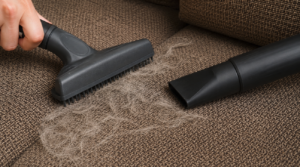
Learn How To Clean Sofa Fabric In 10 Minutes. Master 5 Easy Methods To Remove Daily Stains And Protect Your Couch.
View details
People looking for best cleaner for sofa fabric usually want to get the name of a bottle of product directly. But whether any cleaning agent can be used…
View details
Find the best upholstery fabric for sofa by matching fiber, weave, and finish to wear, pets, light, and cleaning.
View details
Affordable upholstery fabric means comparing fiber, structure, width, and total cost, not just the sticker price.
View details