 Elitesofabric
Choosing Affordable Upholstery Fabric on a Budget
0Affordable upholstery fabric means comparing fiber, structure, width, and total cost, not just the sticker price.
View details
Search the whole station
Buying sofa fabric is often not the color, but the budget is the hurdle that really sticks to many people. It also says polyester, the price can range from a few dollars to dozens of dollars per yard, and the number can be several times different. When faced with affordable upholstery fabric, many people instinctively think that the cheaper it is, the more cost-effective it is. As a result, the money saved is often doubled back in cutting, rework and early replacement.
The landing cost of a piece of fabric is never just the number on the price tag, at least plus samples and proofing, packaging, transportation, customs duties, customs clearance, inspection and local distribution. More importantly, if the initial price is lower, but accompanied by a narrower usable width, higher defect rate, greater loss of flowers or shorter service life, the actual cost of spreading to the 1 piece of sofa is higher. Low prices do not constitute savings in themselves, and only when the same use and acceptance conditions are met can they be said to be cost-effective.
Budget is a relative concept, which is especially important when choosing budget fabrics & upholstery. The same cloth is used in low-frequency guest rooms and in the living room where children and pets jump every day, and the wear rate is completely different. Therefore, don't rush to compare prices first, and write down the usage scenarios clearly: whether it is a residence or a public space, whether it is high intensity or low frequency, whether there are children and pets in the home, and how long it will take to receive a cleaning and a replacement. Set down these conditions, the budget is meaningful; If you take a piece of low wear-resistant cloth to deal with the high-frequency seat surface, it is equivalent to folding the service life in advance.
The most common mistake when looking at quotations is to compare numbers of different calibers directly together. By yard, by meter, by volume and by the whole batch of quotations, the calculation is completely different and must first be converted to the same usable area and usable length. At the same price per meter, the corresponding coverage area is different under the condition of different width, and the pattern circulation and unavailable cloth edge will further eat up the actual cutting area. The zero-cut price usually includes the cost of picking, cutting, repacking and inventory fragments, while the whole volume price may come with minimum order quantity and short code rules, which are not the same service scope. After aligning these calibers, the price comparison is fair.
Many people only look at the first screen price of the product page, but ignore the return limit, replenishment cost, sample fee, freight and payment fee, which will change the real budget of an online purchase. Labels such as sale, discount and clearance may come from promotion, shutdown, remaining batches or inventory adjustment of a certain color. It does not indicate the quality of the fabric, nor can it guarantee long-term replenishment in the future. If this is a cloth change project, the total cost will also include lining or filling materials, removal, repair, cutting, floral, sewing, covering and taxes. The error will be very large if the unit price of the fabric is used alone.
There is also a common illusion in budget procurement, that is, the brand premium is directly regarded as the improvement of material performance. The brand premium may include design, distribution, inventory, display, authorization, service and market positioning, which may not make the fiber more wear-resistant and color fastness. manufacturer, supplier, wholesaler and retailer are just role names. Manufacturers are not necessarily the cheapest and retailers are not necessarily the most expensive. Who can really guarantee quality and replenishment depends on specific contracts and product documents. The correct order of budget procurement is to retain the hard thresholds of purpose, safety, compliance and key performance before comparing prices among qualified candidates, rather than cutting off the necessary specifications for a superficial low price. 
The really smart way to save money is to spend it on the blade. First determine which conditions must be met, such as wear resistance, pilling, seam stability, color fastness and cleaning maintenance, which should be supported by corresponding test data; which can be weighed, such as color, texture and style. Before purchasing, you should have the fiber content, fabric structure, width, gram weight, color batch, test results and maintenance instructions to avoid betting on a batch of unclear goods at a beautiful low price. For the first batch purchase, you can make a small batch or trial order to verify the color batch, package quality, packaging and delivery, and then decide whether to expand the quantity. Step by step in this way, the real money is saved, not the risk to yourself.
At the end of the day, choosing a really cost-effective soft bag fabric is not about finding the lowest number, but about putting the use, specifications, caliber and total cost on the table. With these in mind, purchases with limited budgets can also make choices that stand the test of time.
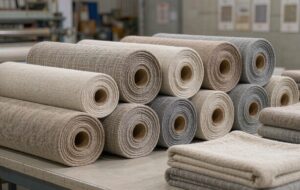
Affordable upholstery fabric means comparing fiber, structure, width, and total cost, not just the sticker price.
View details
Learn How To Choose Black And Brown Upholstery Fabric By Checking Color Fastness, Light Fading, And Cleaning Needs.
View details
Learn How To Clean Velvet Upholstery Fabric Safely With Expert Tips For Stain Removal And Pile Restoration.
View details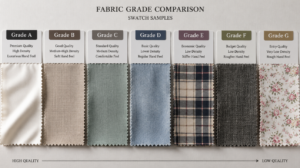
Fabric Grades Don't Mean Durability. Learn What They Really Mean And How To Choose The Right Upholstery Fabric.
View details