 Elitesofabric
Best Hard-Wearing Fabric for Sofas: What to Check
0Compare best hard wearing fabric for sofas through test methods, wear reports, seam checks, and care requirements.
View details
Search the whole station
When you lay several fabric swatches side by side, it’s easy to be swayed by the product names: polyester sounds low-maintenance, linen feels natural, velvet is soft to the touch, and bouclé has a distinct looped texture. However, these terms do not refer to the same thing. Some are fibers, some are fabric structures, and some are surface effects; judging solely by the name often overlooks the factors that truly determine performance in application.

To determine the best type of fabric for sofas, don’t rush to ask which material is the best. First, consider where this fabric will be applied, how it will be installed, and how it is most likely to wear over time. The answer will vary depending on the sofa’s structure and how it is used.
The fabric fixed to the frame, the removable sofa cover, the load-bearing seat cushions, and the decorative pillows each bear different loads. The seat is frequently subjected to compressive loads, friction, seam tensile forces, and stains; the backrest, side panels, or purely decorative components may have different performance priorities. Fixed covers also need to account for tacking, stitching, corner folding, and conforming to curved surfaces, whereas removable slipcovers place greater emphasis on recovery after stretching, repeated assembly and disassembly, and dimensional changes after washing.
Next, clearly describe everyday life. Is it a low-frequency guest sofa or a daily family sofa? Is the room light strong? Are there children or pets? Is the cleaning time limited? Only by listing these conditions can we know whether the priority should be to prevent abrasion, pilling, hooking, seam opening, fading, stain residue, or changes in hand feeling and appearance after cleaning.
To fully understand a piece of upholstery fabric, one must consider several aspects: fiber composition, yarn structure, fabric construction, surface appearance, and finishing processes. For example, 100% polyester only indicates that the weight of the declared fiber is all polyester. It will not tell you whether it is woven or knitted, whether it has suede and backing, nor can it prove that it must be wear-resistant, anti-pilling or easy to clean.
Similarly, chenille primarily creates a plush surface through the use of fancy yarns, traditional woven velvet relies on a specialized pile structure, while bouclé is distinguished by its knots and loops. The tactile and visual differences they create are quite apparent, but whether the loops are prone to snagging, the pile is likely to flatten, or the surface tends to pill still depends on the specific design and test results. Jacquard patterns are formed during the weaving process and do not correspond to any specific type of fiber or durability grade.
Woven, knitted, and coated materials cannot be interchanged solely based on their similar appearance. Woven fabrics should pay attention to warp and weft structure, fracture and seam performance. Knitted fabrics also depend on stretching, recovery and blasting performance. Coating materials increase the problems of surface adhesion, bending, hydrolysis resistance and cleaning compatibility.
Don’t just focus on a single wear resistance figure. Wear resistance, pilling, snagging, seam stability, dry and wet rubbing colorfastness, light fastness, and changes after repeated cleaning each address different aspects. Even if a fabric exhibits high abrasion resistance under specified conditions, it cannot be concluded from this that it will not pill, snag, or retain its original color and hand feel after cleaning.
When comparing different candidates, clarify the testing method, specimen conditions, orientation, endpoint, units, and the specific model or batch corresponding to each result. The numerical values of different wear resistance systems cannot be directly converted. The so-called "easy to clean, antifouling or pet-friendly should also continue to ask: what kind of dirt, what kind of cleaning agent is allowed, how to evaluate it after repeating it many times, and what kind of damage is not within the scope of the statement.
When using high frequency in the home, you can first set the threshold that cannot be conceded, such as seams, wear resistance, pilling, hook wire, common stain treatment and color transfer risk. Tactility, texture and color are then compared between qualified candidates. This way, you won’t overlook critical weaknesses just because a piece of fabric is thick, very soft, or has an appealing marketing name.
Small color swatches are suitable for initial screening, but they are not sufficient to evaluate the entire sofa. It is best to ensure that the sample clearly displays its full grain or pattern repeat, and to examine it separately on a horizontal seat surface, a vertical backrest, and a curved armrest. Suede, corduroy, directional chenille and some jacquard fabrics will produce different light and shade with the direction and incident light. This change may not be color difference, but it will directly affect the cutting direction and the appearance of the finished product.
Check the front and back sides, thickness, stretch, and recovery by hand, then examine whether loops, long floats, or pile are easily snagged. When preparing to change the fabric, the contractor should also use sufficiently large sample pieces to test stitching, bending, or wrapping—especially for curved surfaces, deep welts, bound edges, and tight-radius corners. A sample that looks good when laid flat may not maintain the same appearance at joints or under stress.
The care instructions should also be reviewed along with the sample. Whether the fixed table cloth allows wet cleaning, whether the cover cover is washable, how the suede should be sorted, and which cleaning methods should be excluded from the backing or coating should be confirmed before purchase, instead of trying again after stains appear.
The final inquiry should not simply state “sofa fabric” or the name of a specific material. At a minimum, correlate the item number with its intended use, fiber composition, fabric structure, color, net fabric width, areal weight, pattern direction, nap direction, finishing treatments, backing material, performance characteristics, and care instructions. Colors shall be confirmed against the approved sample or color code. For sectional or corner sofas, ensure that all pieces are from the same batch, roll number, pattern orientation, and pile direction.
The width and direction will affect the actual amount used. Plain, non-directional fabrics may allow for rotated pattern pieces, while nap fabrics, stripes, plaids, or single-direction patterns typically impose greater restrictions and can increase fabric waste due to matching and directional cutting. The official procurement quantity shall be verified based on the actual measurements of the furniture, the actual fabric width, the pattern repeat, and the cutting layout; it must not be determined solely by applying a fixed yardage per seat.
The truly suitable choice is a fabric that, when applied to the designated furniture component, meets the required performance and maintenance specifications, is feasible to install, and whose actual appearance is also acceptable. Before placing the order, ask the supplier or contractor one last time: Do these test and care instructions, along with the sample, correspond to the specific model number and batch I will receive?
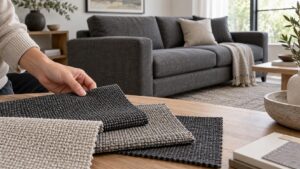
Compare best hard wearing fabric for sofas through test methods, wear reports, seam checks, and care requirements.
View details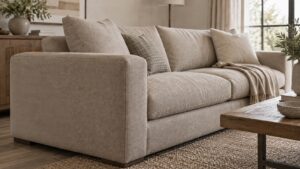
Learn how to assess canvas fabric for sofa use by checking weave, fiber content, seams, care, and sample performance.
View details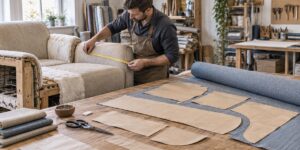
Estimate the amount of fabric to reupholster sofa projects by checking panels, usable width, nap, repeats, and waste.
View details
Understand what is 100 polyester fabric, what it tells you, and which upholstery specifications need separate proof.
View details