 Elitesofabric
How To Clean Antique Chair Fabric Without Damage
0Learn how to clean antique chair fabric by checking material condition, care limits, spot testing, and drying risks.
View details
Search the whole station
When a cat jumps on the sofa, it is often not the whole piece of cloth that is really vulnerable, but the loops, long floating threads and loose yarns that can be inserted into the tip of the claw. A single snag may initially leave only a small loop, but continued pulling can cause it to expand into a noticeable thread pull. Directly interpreting “substantial feel” or “high abrasion resistance” as meaning the material is scratch‑proof can easily lead to the wrong choice.
The anti scratch sofa fabric on the market is more suitable as a use target than a material category that does not require verification. Without specific models, test conditions and damage definitions, the word “anti-scratch” does not indicate 3 kind of scratch, how many times it can withstand, or what appearance changes are considered to be invalid.

After getting the sample cloth, first observe the surface from the side light. Obvious open loops, longer floating lines, soft fancy yarns and raised decorations make it easier to provide focal points for sharp objects. A flat, tight surface can usually reduce some hooking opportunities, but this is only a preliminary screening, can not be based on the “cat scratch not bad” guarantee.
Don’t just feel the front side. Gently bend the sample fabric to see whether the yarns easily separate; then inspect the pile length, the height of the texture, and the back structure. High loops, long fleece, or fluffy surfaces may be soft, but additional evaluation of the changes after hook, pilling, and repeated rubbing is required. Names such as chenille, loop pile, or jacquard do not, in themselves, substitute for a structural inspection.
Different parts of the sofa should also be evaluated separately. The seat surface and the front edge bear continuous sitting pressure and friction, and the outer side of the armrest, corners and positions often passed by pets are more likely to be pedaled by claw tips or body. Fabrics that perform well in backrest upholstery may not necessarily be suitable for these high-wear areas.
Wear resistance, pilling, and snagging are distinct forms of failure. The wear resistance test can observe yarn breakage, breakage, quality loss or appearance changes, but the higher wear resistance results still cannot rule out that the yarn is hooked, nor can it mean that the surface will not fluff or pilling. These items should be checked separately when purchasing.
When reviewing the abrasion resistance report, verify the test method, version, abrasive material, applied pressure, end point, specimen orientation, and results. The movement mode, abrasive and result expression of Martindale and Wyzenbeek are different, and the numbers cannot be directly converted and compared. If a report contains only a rub count but lacks information on the method and endpoint, the information is incomplete.
If the supplier claims that the fabric has anti-scratch or pet-friendly properties, he can continue to ask: what exactly does the “scratch” in the statement mean, what kind of hook or simulation method is used, how many times it is repeated, what appearance grade is used as the result, and what damage is not within the scope of the statement. Pet claw grasping is a compound use situation; internal simulation should also explain claw shape, load, angle, number of times and appearance end point, and internal comparison cannot be regarded as general certification.
The report addresses relative performance under controlled conditions, and in fact helps identify specific risks in the family. When comparing candidate fabrics, use the same dimensions and observation conditions, focusing on whether the surface is prone to snagging, whether it pills after repeated light friction, and whether any pills can be removed using approved tools. Internal comparisons can only be used for screening and cannot be expanded to absolute pet-resistant conclusions.
Color and cleanliness also affect the actual experience. Whether the pet hair is obvious is related to the contrast of hair color and fabric color, texture, static electricity and whether the hair enters the groove. A flat, tight surface is often easier to remove particles, but the real ease of cleaning also depends on the type of soil, care code, finishing, seams and permitted cleaning agents.
Before batch purchase, the test data should be corresponding to the specific model number or batch, and the confirmation sample should be retained. The same trade name does not mean that different batches are completely consistent in color, feel and structure. If the fabric will be used in the entire sofa, the seat surface, armrests, backrest and pet high-frequency contact areas should be included in the sample confirmation, rather than just looking at 1 small decorative area.
Fabric selection can only reduce some material risks and cannot replace scratching training, scratching board configuration, nail management and protection of vulnerable positions. Do not continue to pull loose yarn when small hooks have already appeared. Only applying glue on the surface may solidify the yarn into hard spots and allow the subsequent stress to continue to expand from the edge of the glue layer.
Daily hair removal may also cause damage. Incompatible lint rollers, hard brushes, or high-suction narrow nozzles can pull threads, alter the nap direction, or leave localized scuff marks. Before starting to use, make sure that the suction head, brush tool and operating direction are compatible with the fabric on an inconspicuous sample. During shedding season, when you increase the frequency of cleaning, be sure to avoid relying on excessive scrubbing just to achieve a temporarily clean appearance.
The ultimate choice is not to find the strongest “scratch-resistant” propaganda in the 1 sentence, but to identify surfaces that are not easy to hook on the tip of the claw, evidence of wear and silk hooking that is consistent with the purpose, executable cleaning methods, and protective measures that families can adhere to over the long term.
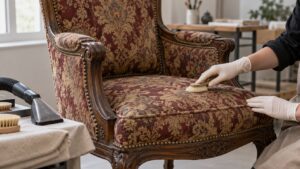
Learn how to clean antique chair fabric by checking material condition, care limits, spot testing, and drying risks.
View details
Understand what is 100 polyester fabric, what it tells you, and which upholstery specifications need separate proof.
View details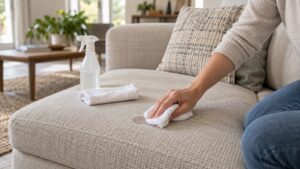
Choose the best cleaning solution for fabric sofa by checking the care code, stain type, and material limits first.
View details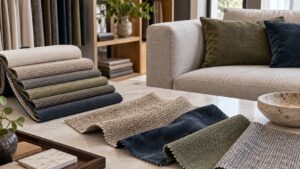
Learn how to assess best quality sofa fabric through use, testing, samples, care, and batch consistency.
View details