 Elitesofabric
Bench Fabric: Choose For Load, Edges, And Daily Care
0Choose Bench Fabric By Seat Load, Surface Structure, Seam Stability, Cleaning Limits, And Installation Details.
View details
Search the whole station
When choosing sofa fabric, in the face of a lot of small color cards with similar colors, many people habitually rub 1 with their hands to feel the texture, pinch the 1 and pinch the thickness, and then casually ask the merchant 1 sentence: “How many turns can this fabric wear resistance test achieve?” Don’t be fooled, this is often the beginning of you buying a sofa and stepping on the pit. Thick hand feeling does not mean really durable; Even if the wear resistance index sounds scary and the time is 1 long, the fabric should pilling or pilling, the hook wire or hook wire, and even the seams will crack. To judge whether a piece of fabric is good or not, the key does not lie in these dry single data. You have to see if it is really stretched on the sofa you want to buy, placed in the specific environment of your home, and matched with your usual cleaning habits, whether it can still last for a long time without losing the chain “.
The “top sofa fabric” often referred to in the circle actually does not refer to a certain 1 of specific fiber materials, nor is it a multiple gram weight per square meter, nor is it a certain “grade” boasted by businesses “. It is more like a set of comprehensive acceptance criteria: matching usage scenarios, complete performance test reports, small sample performance in line with expectations, stable and consistent quality of large goods, and can maintain the original texture for a long time under your daily cleaning and maintenance.

Don’t rush to compare the names of fabrics that sound high. Take some time to figure out where and how to use this sofa: in the reception area where no one walks around, or in the living room where the whole family uses it frequently every day. Will the seating area be rubbed for a long time? Are there children or cats and dogs in the house? Will the sofa be exposed to direct sunlight? How much time can you spare to take care of it every day?
These most practical living conditions will directly alter the prioritization of various fabric performance indicators. In areas where people move frequently, you have to focus on the abrasion resistance, pilling resistance, tension at the seams, and whether it can remain intact without deformation. If you have a pet at home, you must be careful when choosing a velvet fabric: carefully weigh the risk of it being scratched by the master, and it will not be obvious after sticking the hair, and whether it will be dirty or not. If the sofa is placed by the window, no matter how bright the cloth is when it was first bought, it will fade sooner or later as long as the “color fastness to the sun” does not pass. To give another real example, if the cover of this sofa cannot be removed at all, the “support for machine washing” boasted by the merchants is 1 pure nonsense to you.
Wear test results are useful, but only if the report clearly states the test method, sample status, test direction, unit of measurement, and criteria for assessing “wear failure. Martindale (Martindale) and Valspar (Wyzenbeek) are completely different in methods, friction materials and results. The data of these two systems cannot be directly converted, let alone compared with each other. Moreover, laboratory data can only reflect relative performance under specific conditions and should by no means be taken as a guarantee of actual service life.
It is recommended that you put “wear resistance” back in a comprehensive risk assessment list. Most of the time, the surface of the fabric is often pilling, fluffing or hooked, and the yarn near the seam may also be misplaced, resulting in some small cracks-note that these problems are completely different from the direct “wear through” of the fabric. Tensile strength, seam slippage, pilling resistance, and colorfastness to rubbing—these indicators evaluate the fabric’s performance from different perspectives. The fact that the fabric is made thick and heavy does not mean that it must perform better in these areas.
When looking for a supplier to test the report, the first step is to check the product number and batch number on the report, and then look at the test method, version, result unit and scope of application. If the 1 report is full of vague words such as “qualified”, “commercial grade” or “high-end”, but there is no specific definition and implementation standard, then you can’t rely on it to objectively compare the two fabrics.
After sifting out those obviously unreliable options with technical parameters, be sure to look at a large enough physical sample cloth. You need to carefully examine the fabric’s front and back sides, its edges, and its surface texture. Although the small color card can make you feel the texture and color, it often can’t see the circulation rule of the pattern, the overall direction of the inverted hair, or the color difference from the edge to the center. If it is suede material, remember to change a few more angles to observe its luster and depth changes. If the surface is covered with velvet or long velvet fabric, you must pay special attention to those places that are easy to be hung by sharp objects.
Next, we have to do a few comparative tests that simulate real usage. Take the sample cloth to the same lighting environment as your home and see if the color matches the floor, curtains and other soft clothes in your home. Gently bend the sample cloth and check its base cloth, thickness and resilience. Choose a light-colored fabric you plan to pair with it, and rub it firmly against the sample fabric several times to check if there’s any risk of color bleeding. If you plan to make a fixed sofa cover that cannot be removed, you ‘d better let the master try to suture and wrap it at the radian and corner. Some fabrics look very advanced when laid flat, but once they are used at seams or acute corners, they will appear particularly bloated, easy to unthread, or extremely unevenly stretched.
The “good care”, “anti-pollution” and “clean 1” in the mouth of merchants are completely different things in terms of actual performance. Before paying, be sure to find out what kind of stains the fabric can deal with, what detergent is allowed, how to wash it, how many times it can be washed at most, and whether washing will cause fading, shrinkage, or damage its original texture, fluff, coating and base cloth.
Any cleaning method that has not been tried must first be tested on the edge of the fabric or in an inconspicuous corner. Once a water-based or solvent-based cleaner is used incorrectly, the fabric is extremely easy to fade, color, and harden, leaving an ugly watermark in circles, and even the lining will be destroyed. If you repeatedly and vigorously rub the same spot, the gloss and nap of that area will become markedly different from the surrounding surface. At the end of the day, what determines whether your sofa can keep its appearance in the next few years is often not the protection treatment that sounds fantastic, but whether you can stick to the maintenance guidelines recommended by the manufacturer for a long time.
The final approved sample fabric must be individually matched with the model number, color code, batch number, and date. When the goods arrive, you have to take this sample cloth to check the color, feel, texture and direction of the hair to see if you can accept those slight visual deviations. “Type inspection” proves the performance of a certain design under specific conditions, and “incoming inspection” and “batch-by-batch inspection” are the key to ensure stable quality. Don’t confuse the two.
Before placing an order, all details-including fiber composition, fabric structure, effective width, gram weight, acceptable color difference range, recommended use, maintenance instructions, test reports and batch requirements-should be written in black and white in the purchase specification (contract). No matter how big the fabric brand is, how nice the series name is, and no matter how expensive the price is, it must not be an excuse to omit these core messages.
A good fabric that is really worth paying for does not necessarily have to be the first in a certain indicator. It should be able to withstand an extremely realistic soul torture: considering the usual use frequency, cleaning requirements and production technology of sofas, can the supplier provide solid and verifiable evidence-to prove that the objects you received are the same as those you saw at the beginning-and can you provide a set of clear acceptance and use guidelines?

Choose Bench Fabric By Seat Load, Surface Structure, Seam Stability, Cleaning Limits, And Installation Details.
View details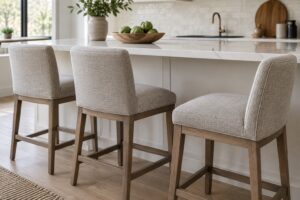
Choose bar stool upholstery fabric by checking wear, seams, texture, cleaning limits, and installation needs.
View details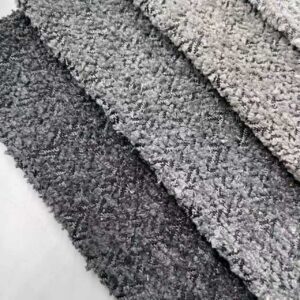
Choose brown couch material by comparing color, texture, durability, care, and batch consistency for real sofa use.
View details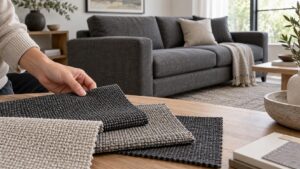
Compare best hard wearing fabric for sofas through test methods, wear reports, seam checks, and care requirements.
View details