 Elitesofabric
Can We Change Sofa Fabric? Check Before Reupholstery
0Can we change sofa fabric? Learn how to assess the frame, upholstery method, fabric fit, yardage, and final checks.
View detailsSearch the whole station
The skeleton and sponge are obviously still good, but the cloth on the surface is pilling, shiny or faded-in this case, it is not difficult to pick a piece of cloth with similar color and change it. The difficulty is how to make sure that the new fabric can withstand the daily “ravages”. Don’t be fooled into thinking the seat, backrest, and armrests are made of the same fabric—each endures quite different levels of wear and tear. The armrest is constantly being rubbed by palms, while the backrest is only leaned on occasionally. So when choosing fabric, don’t just focus on whether the color looks good.
Before heading to the fabric store, it’s best to grab a piece of paper and jot down where this chair usually sits, how the original upholstery is secured, and what problems tend to arise most often. By comparing samples with these questions in mind, you’ll be much more efficient than simply picking a color from an entire row of fabric swatches, helping you quickly eliminate those “all style but no substance” options.
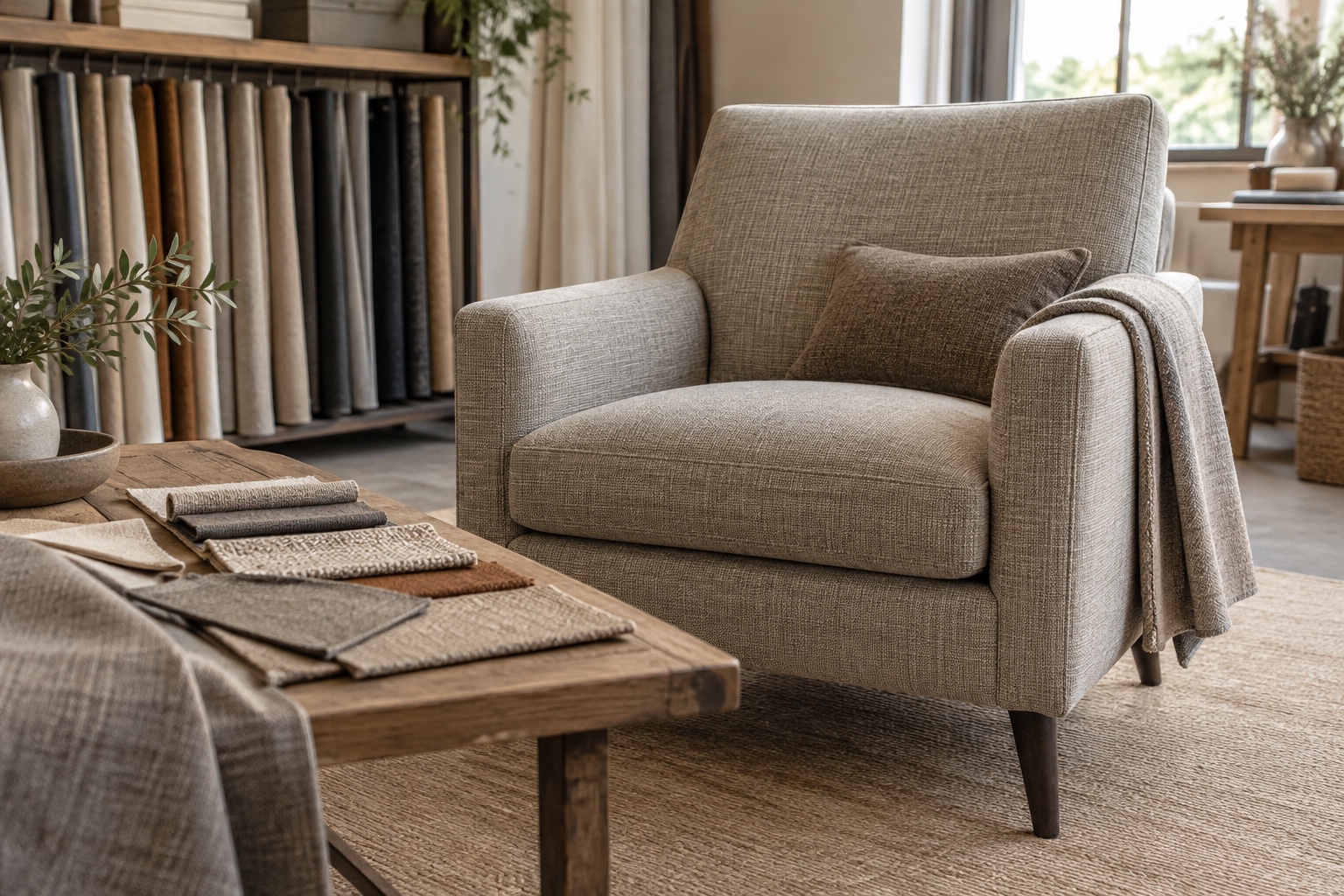
In everyday conversation, we often use “cloth,” “fabric,” and “textile” interchangeably, but in the world of interior soft furnishings, that doesn’t mean they can all be used to upholster furniture. The fabric used for sofas must be able to withstand the weight of people sitting on them, endure daily rubbing, have seams that don’t tear easily when pulled, and also be easy to clean. If you tried to use curtain fabric for a sofa cover, that would be pretty funny—curtains are valued for their drape and light-blocking properties; no matter how comfortable they feel or how ethereal the color, they’re not suitable for sofas.
Also, you need to decide whether to go with a “fixed套” (a permanently attached cover) or a “loose套” (a removable, adjustable cover). Seat covers are usually sewn, stapled, or glued to the chair, so you can’t remove them for washing like you would with clothes when they get dirty. Although the fitted cover can be removed, will it shrink or lose its shape after washing? Is the stretching direction correct? How do you attach the zipper? And can it still be put back on as before after washing? These factors directly determine the final result. When buying fabric, simply let the shopkeeper know upfront whether you need it for a “fixed upholstered armchair” or a “removable, washable slipcover”—this can save you a lot of potential misunderstandings.
First, take a look at how you usually use this chair. If you like to read on it, the front edge of the seat cushion and the armrest will definitely be rubbed repeatedly. If the chair is just placed by the window, you must be careful whether it will fade in the sun every day. If you have cats and dogs at home, you have to consider whether the cloth can prevent the claws of your masters from snagging, sticking hair and stains. A casual “durable” simply doesn’t solve all the problems.
The fabric’s abrasion resistance, pilling rate, snag resistance, tensile strength, and seam slippage are, frankly, entirely different matters. Even a high abrasion resistance rating doesn’t guarantee that the fabric won’t pill or that the seams will hold up; standard abrasion tests also fail to prove its durability against pet claws. Rather than blindly chasing a seemingly perfect “composite score,” it’s better to first identify which stage your system is most likely to fail, then directly request the corresponding test data from the supplier—this approach is the most practical.
The names of fibers listed on the ingredient label only indicate what raw materials were used to spin the fabric. Whether this fabric is suitable ultimately depends on the yarn’s condition, whether it’s woven or knitted, whether the surface has a nap or jacquard pattern, as well as the base fabric, coating, and finishing processes. Even if two pieces of fabric have exactly the same fiber composition, their final structure and hand feel can still be vastly different. Names like “velvet,” “chenille,” “jacquard,” or “loop pile” sound sophisticated, but they can never replace specific composition ratios and performance data.
Therefore, feeling “substantial” doesn’t necessarily mean greater wear resistance, and feeling “soft” doesn’t guarantee that the fabric won’t pill after prolonged use. What can truly be compared are the weave structure, physical samples, and test results of a specific fabric model or batch, rather than simply comparing the names of two materials in isolation.
Don’t let those spotlights in the store fool you. It’s best to take the sample fabric back to the room where the chair will actually be placed, check its color in natural light during the day, and then see how it looks under artificial lighting at night. If you choose a fabric with a reflective finish, faux suede, or a strong textured surface, be sure to examine it from multiple angles to observe the changes in light and shadow. When working with napped fabrics that have a distinct nap direction, if the grain isn’t aligned properly during cutting, the finished product will inevitably show a very noticeable color difference between adjacent pieces of fabric.
Fold the sample cloth with your hand to see if it can fit the corner of the armrest smoothly. Use your fingertips to gently pull on the surface to see if there are any coils or long floating lines that are easy to be hooked out. Then put the sample cloth together with the original seam, inlay and arc surface of the chair to make a figure out whether this thickness will make the wrapped corners look too bloated. A piece of fabric that looks great when laid flat may not be suitable for areas with complex curves or tight corners that need to be snugly wrapped.
The final color shall be subject to the confirmed bulk sample fabric. Just listening to the color names alone cannot guarantee that there will be no color difference between different batches. If you’re purchasing in large quantities, be sure to verify the model, color, and roll or batch number to ensure that all exposed fabric on each chair comes from the same production batch.
When you receive the fabric’s abrasion‑resistance test results, first clarify how the test was conducted: the orientation of the sample, the amount of pressure applied, the type of friction material used, and the specific criteria used to determine when the fabric is deemed “failed.” For example, the most common Martindale and Wyzenbeek tests employ entirely different methods and yield vastly different results; their numerical values cannot be directly converted into one another. More importantly, laboratory data are only used to compare relative performance under specific conditions and cannot be directly translated into “how many years it will last in your home.”
For everyday armchairs, you should also pay attention to pilling resistance, seam slippage, dry and wet rubbing colorfastness, and light fastness. If you choose a dark-colored fabric and often sit while wearing light-colored clothing, you must specifically confirm the fabric’s colorfastness to rubbing. For a chair placed by the window, it is necessary to understand the conditions of the lightfastness test. Remember, all test results must pertain to the specific fabric you intend to purchase, not to some generic product that sounds similar.
Carefully read the care instructions for the furniture and fabric to confirm whether it can be washed, dry-cleaned (solvent cleaned), or treated by other methods, and also check if the fabric covers can be removed. It’s important to note that “can be disassembled” does not mean “can be washed in the washing machine.” Fabrics with a backing, coating, or pile are highly sensitive to water temperature, soaking time, and detergents.
When you encounter daily stains, you can directly ask the supplier: what stains are included in their stain resistance test? How long does the stain stay? How to clean it? How many times have you washed it? After washing, have you checked whether the fabric has faded, shrunk, or whether the feel and coating have deteriorated? Only if these conditions are on the surface, the 3 words “good care” are the truth. After receiving the sample fabric, you can also take a scrap of fabric from the edges or an inconspicuous area and wash it yourself first to check in advance whether it will fade, leave water stains, become stiff, or develop a rough surface.
Before placing an order, it’s best to prepare a checklist to verify the fiber composition, fabric structure, usable width, weight per square meter, color and batch number, right and wrong sides, pattern direction, finishing processes, as well as recommended uses and care instructions. If the fabric has a pattern or a directional nap, you also need to confirm the pattern repeat (matching interval), the standard lay‑out direction, and any pattern‑matching requirements, as these details can result in you needing to purchase significantly more fabric.
When calculating the materials, don’t add up the area of each side of the chair foolishly. The shape of the pattern pieces, seam allowances and hemming margins, the mirror symmetry of the left and right armrests, piping details, pattern matching, nap direction—even efforts to avoid fabric defects—all contribute to increased fabric consumption. If it is the kind of fixed soft bag with complicated structure, before typesetting and cutting, it is best to find a master who knows furniture construction to help you check the original fabric, filling, seam position and fixing method 1.
Before payment, put the sample cloth back next to the chair, and answer these 3 questions one by one in mind: is this cloth really used to make soft furniture bags? Can the data given by the merchant solve the most easy damage risk of this chair? Can I take care of it for a long time in the future?
Only these 3 questions are certain, the color and texture of the fabric are really worth your money.
Can we change sofa fabric? Learn how to assess the frame, upholstery method, fabric fit, yardage, and final checks.
View details
Understand what is 100 polyester fabric, what it tells you, and which upholstery specifications need separate proof.
View details
Learn How To Choose 4 Seater Recliner Sofa Fabric By Checking Movement, Seams, Wear, Direction, And Care.
View details
Explore polyester velvet, jacquard, printed, embossed, and woven upholstery fabrics. Compare six designs and request samples or a project quote.
View details