 Elitesofabric
How To Clean Antique Chair Fabric Without Damage
0Learn how to clean antique chair fabric by checking material condition, care limits, spot testing, and drying risks.
View details
Search the whole station
A four-seater L-shaped sofa typically handles the heaviest daily use in the living room. The corner position is prone to repeated sitting pressure, the front edge of the seat surface is continuously rubbed, and the armrest is often in contact with drinks, snacks and hand grease. When choosing 4-seater l-shaped sofas stain-resistant fabric, what really needs to be confirmed is not a general “anti-fouling” label, but whether the fabric can maintain its appearance, seams and maintainability when facing these specific loads.
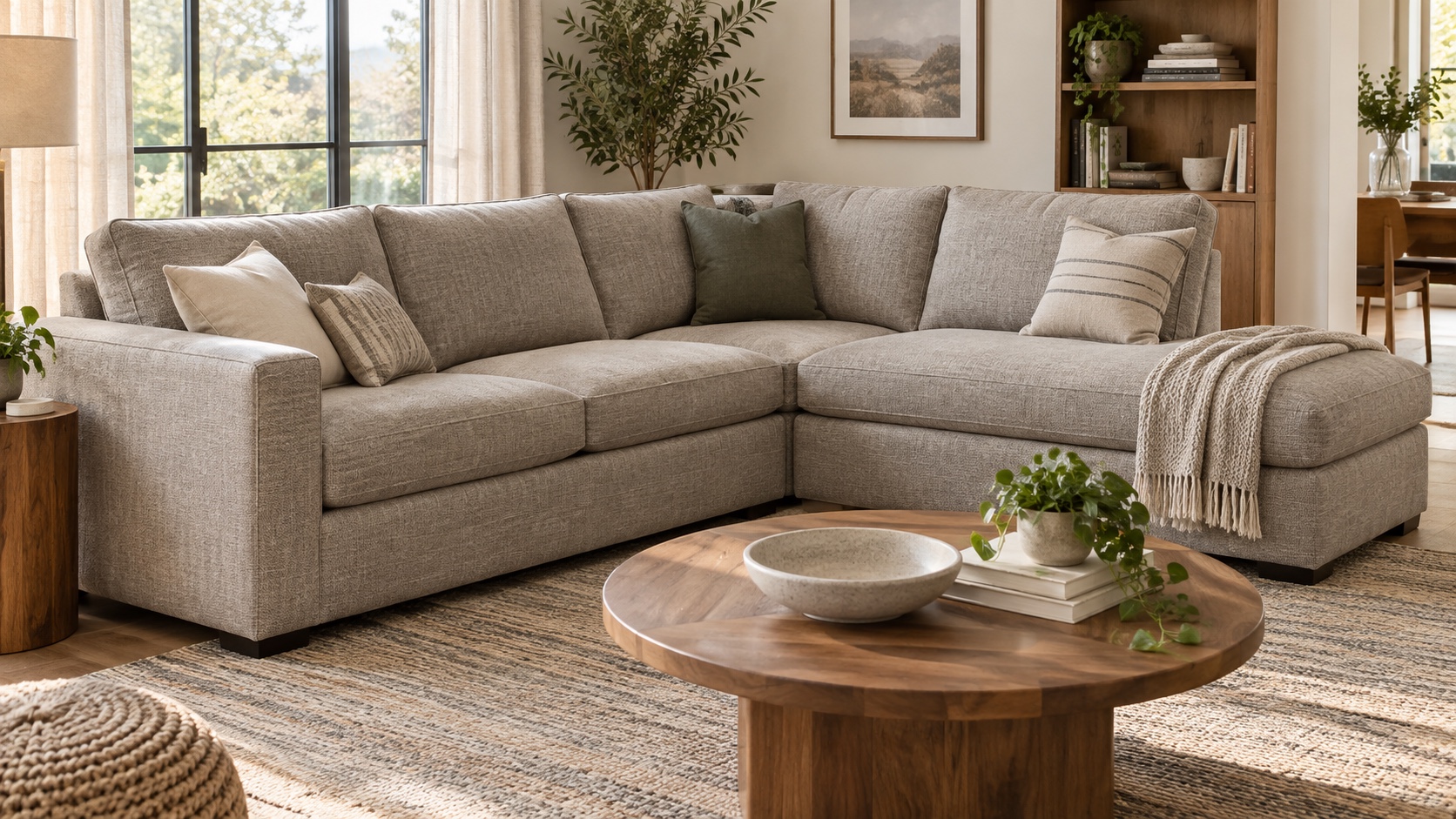
The same four L-shaped structure, the family environment may be completely different. Living rooms with children are more likely to encounter drinks, oily food, pigments or markers. When there are pets, claw scratching, hair loss, stains and peculiar smell should also be considered. Additional attention should be paid to fading caused by light when placed near the window. Frequency of use, indoor humidity, whether the cushion can be turned over, whether the cover can be removed, will also change the material selection.
First, prioritize the most likely issues by their severity to determine whether the so‑called stain‑resistant fabric is appropriate. Liquid resistance, stain resistance, stain release, and ease of cleaning are not the same thing. The formation of water beads on the surface does not necessarily mean that oily contaminants are easy to remove, nor does it prove that water will not penetrate through seams, pinholes, or internal voids. The supplier’s instructions shall clearly specify the applicable contaminants, handling time limits, permissible cleaning methods, validation cycles, and any associated limitations.
The performance of sand release is determined by multiple levels, including fiber composition, yarn morphology, woven or knitted structure, surface effect, backing, coating and finishing. Even if both fabrics are marked as polyester, there may be significant differences in hook, pilling, seams and appearance after cleaning due to differences in tissue tightness, suede structure or finishing.
When determining the best fabric for a sectional sofa, the surface texture should be included in the physical inspection. A tightly woven structure can serve as an initial indicator for reducing exposed yarns and the likelihood of snagging, but it still cannot replace testing. Loops, long floating threads, or longer pile fibers require particular attention to pilling, snagging, and flattening after friction. Heavy feel is not equal to more durable, because the weight and thickness can not replace the wear resistance, strength, seam stability and recovery performance.
The corner of the L-shaped sofa, the front edge of the seat surface, and the junction of the backrest and the seat surface are often subjected to more complex directional tension than ordinary display samples. The shape of the furniture only indicates that the cut pieces, seams, and material usage will change; it does not automatically create a special category of fabric. Therefore, material verification must be carried out in conjunction with the finished product structure.
During sample evaluation, the fabric can be draped on a corner model or a similar upholstered structure in the intended layout direction to check for openings, bulging, or noticeable creasing around bends, edges, and seams. Seam slippage and fabric body breakage are two different problems, which are also affected by stitch length, stitch, stitch, seam, piece direction and furniture curvature. Providing only high abrasion resistance ratings without seam and finished-assembly testing is still insufficient to assess the durability of a sectional sofa.
For fabrics suitable for home high frequency use, evidence should be built around possible failure modes. The wear resistance data needs to indicate the test method, version, abrasive, pressure, sample direction, end point and result; the numbers obtained by different methods cannot be directly compared. Pilling, hooking, breaking strength, seam slippage, color fastness to dry and wet rubbing and light resistance should also be checked separately and cannot be replaced by a wear-resistant number.
In terms of stain resistance, verification should be conducted based on the actual types of stains found in household environments. Beverage, oily food, pigment and pet pollution need to set up samples separately, record the amount of dirt, residence time, cleaning procedures, processing times, residual color difference and surface damage. Good initial stain-removal performance does not guarantee that the color, hand feel, dimensions, nap, coating, and backing will remain stable after repeated cleaning.
When comparing the best durable stain-resistant fabrics for sectional sofas families, check whether the test result corresponds to the current model number or batch. The report shall include the product type, test conditions, unit of result and scope of application. The test sample cannot correspond to the actual order, or only “easy to clean”, “high performance” and “heavy use” are not enough to form an acceptable standard.
Antifouling properties are only meaningful if the mode of care is allowed. Clear cleaning instructions should be obtained before purchasing, confirming whether water-based or solvent-based products can be used, whether wet machine or steam treatment is allowed, whether the cover can be removed and washed, and what are the restrictions on backing and coating. A removable cover does not necessarily mean it is washable, and even if the fabric is washable, it does not guarantee that the entire finished product will return to its original shape after washing.
Any cleaning method should be pretested in a concealed location or on the same batch of samples. Incorrect cleaning agents, excessive wetting or rubbing may cause discoloration, ring printing, hardening, lint change, coating damage or delamination. After cleaning, the table cloth, backing and filling should be fully dried, and the interior should not be judged by the surface touch alone.
When confirming the best fabric options for sectional sofa durability, first ask for fiber content, fabric structure, available width, mass per unit area, color and batch, recommended use, finishing, test results and care restrictions. Color, feel, cover, stretch, rebound, texture direction and seam appearance were also checked with physical samples.
A four-seater L-shaped sofa requires larger continuous fabric pieces, and directional textures, nap directions, and patterns can also affect the layout and fabric wastage. Before placing the official order, verify the net fabric width, layout direction, pattern-matching requirements, and seam placement based on the furniture’s cutting layout. For batch materials, the volume-to-volume, volume-to-volume and edge-to-edge discrepancies shall be checked using confirmation samples or batch samples, and the allowable deviation shall be written into the purchase specification.
A suitable fabric is not chosen based solely on its name or marketing claims. Only by putting household stains, structural stress, material hierarchy, test methods, cleaning restrictions and batch control in the same set of judgments can the four-seat L-shaped sofa obtain more reliable appearance and maintenance performance under daily high-frequency use.
Learn how to clean antique chair fabric by checking material condition, care limits, spot testing, and drying risks.
View details
Choose the best fabric for furniture by matching use, structure, durability, maintenance, and real sample performance.
View details
Choose The Best Type Of Fabric For Sofas By Checking Structure, Wear, Pilling, Colorfastness, Cleaning, And Samples.
View details
Choose the best fabric for pets sofa by checking surface, hair removal, stains, care limits, and durability.
View details